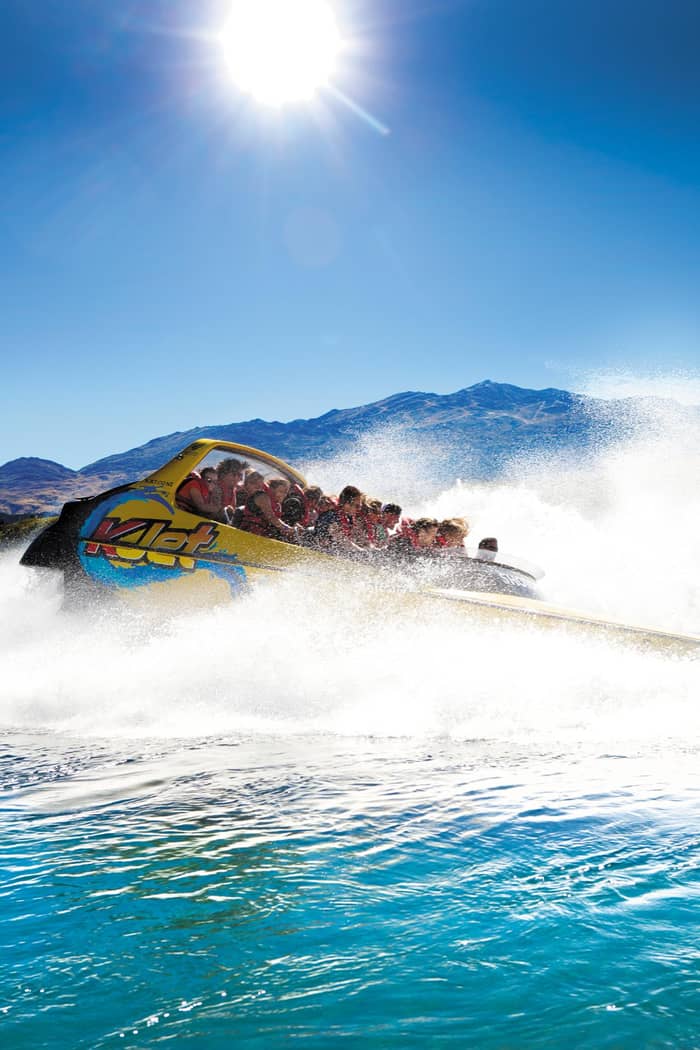
Regulator
The law
Maritime Rules Part 82
- LicenceRequired to carry anyone
- BriefingBefore every trip
- Life jacketsWorn on the river
Guides
Language
Currency
See what is openfrom $87 · cancelling is freePacking and prep checklist
Jet boat ride on the lake, the Kawarau and the Shotover, 1 hour
★ 4.8 · 1,959 reviews total
Checklist · 9 points
Mark each item when done. Progress is stored on this device.
0 / 9 ready
All done. Only the booking is left: your seat on the river.
Book a seatEvery Queenstown jet boat accident that reached a national inquiry, what changed afterwards, the rules drivers work under, and the riders who are better off on the bank.
Editorial team, queenstownjetboat.quest · Updated November 8, 2026 · Reading: 7 min
The essentials
Jet boating is an adventure activity, and the operators say so plainly. Shotover Jet’s terms open by stating that every adventure activity carries a degree of inherent risk, and that riders take that risk on by taking part.8 Knowing that should shape how you ride rather than whether you ride: it pays to understand what keeps the boats safe, what has gone wrong before, and what you can do yourself.
Commercial river jet boats in New Zealand run under Maritime Rules Part 82, whose objective is to protect people on board by limiting the likelihood and consequences of serious harm.9 The rule covers who may drive, what the boats must carry, how passengers are briefed and when trips may run. Operators are audited against it, and the bigger ones add their own systems on top.
Shotover Jet alone marked its 60th anniversary on the river in 2025, and over those decades a small number of accidents10 have been serious enough for a national investigation. Each one changed something: a design, a route, a way of driving. This page sets out the published record first, then the rules and the limits, so you can judge for yourself.
Inquiry by inquiry
| Inquiry | When | What happened | Outcome |
|---|---|---|---|
| Lower Shotover roll | December 199711 | Rolled on a shingle bar11 | Roll bars and lap belts raised17 |
| Canyon steering | October 199912 | Steering caught, wall strike13 | Report published |
| Rock face | June 200014 | Collision with a rock face14 | 2 moderate injuries14 |
| Confluence roll | September 200818 | Rolled on a sand bar4 | One death; bar no longer crossed5,19 |
| Engine stop | March 202116 | Engine stopped, fuse failed15 | Single-failure review urged20 |
From the Transport Accident Investigation Commission’s published inquiries; read each report for the full findings.20
The Transport Accident Investigation Commission, New Zealand’s independent accident investigator, has published several inquiries into commercial jet boats near Queenstown. In December 1997, a boat carrying 10 passengers plus the driver turned into a shallow side channel of the Lower Shotover and rolled on a shingle bar.11 The commission’s safety issues included roll bars and lap belts on boats in braided rivers.17
In October 1999, a canyon boat entered the first canyon of the Upper Shotover at about 65 km/h with 9 passengers on board, and a steering part caught on a bracket so the driver could not turn right.12,13 In June 2000 another canyon boat struck a rock face; the driver and 13 passengers had minor injuries and 2 passengers moderate ones.14
The gravest of these came on 25 September 2008. A boat left the Main Town Pier with 22 overseas tourists and a driver on a one hour trip.18 On the way back it touched a sand bar where the Shotover meets the Kawarau and rolled upside down.4 One passenger was trapped under the hull and drowned, one other was moderately hurt and five more had minor injuries.5
The latest inquiry concerns 21 March 2021, when the boat KJet 8 was on the Shotover with a driver and 12 passengers.16 The engine cut out on a right-hand bend, and the driver lost control.26 The boat carried on under its own momentum into a low branch overhanging the bank, and the driver and one passenger suffered moderate head injuries.27,28
The commission traced the stop to a fuse in the engine control system.15 It called the cause a single point of failure in a critical control system, and recommended that Maritime New Zealand work with operators to find similar weak points across the industry.20 That kind of finding matters beyond a single boat: it asks every operator to look for parts whose failure would leave a driver with no control.
Reading the reports in full is worthwhile if you want detail; they are public on the commission’s website, along with the recommendations made after each one. They are written for the industry rather than for visitors, but the executive summaries are short and plain, and they show how seriously each failure was taken apart.
Should you ride
Find the line closest to you and see what the operators say.
If I am pregnant
Do not ride
KJet prohibits it and Shotover Jet does not allow riding during pregnancy.6,7
If I have a bad back or neck
Ask before booking
Shotover Jet assesses suitability for back or neck problems.21
If I cannot grip or brace well
Bring a support person
KJet requires a support person for riders who cannot hold on throughout.22
If I need help getting in
Book support people
At the canyon, two support people must be booked on your trip.23
If I am nervous but healthy
Ride the town boat
Warnings come before every spin, and you hold a padded seat and rail.24,25
Three layers
Regulator
Maritime Rules Part 82
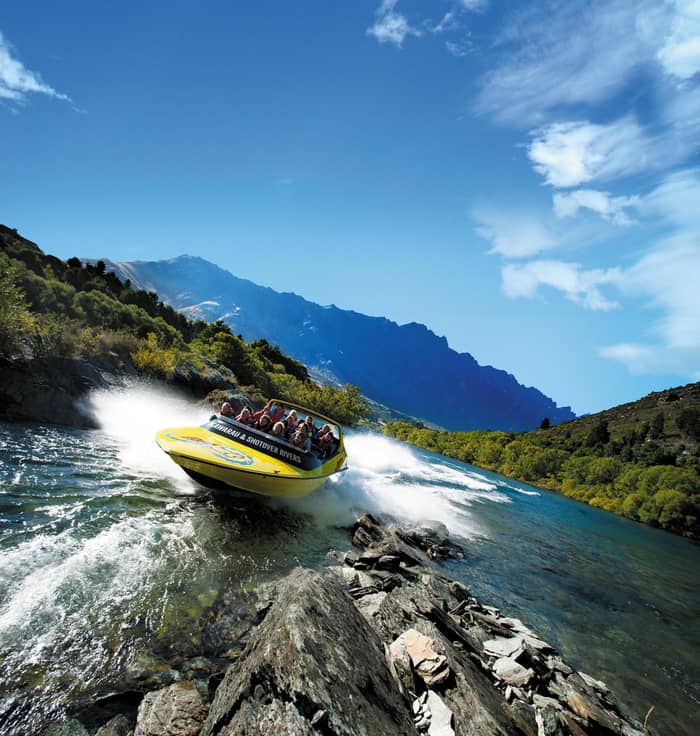
Maintenance
Boats, drivers and checks
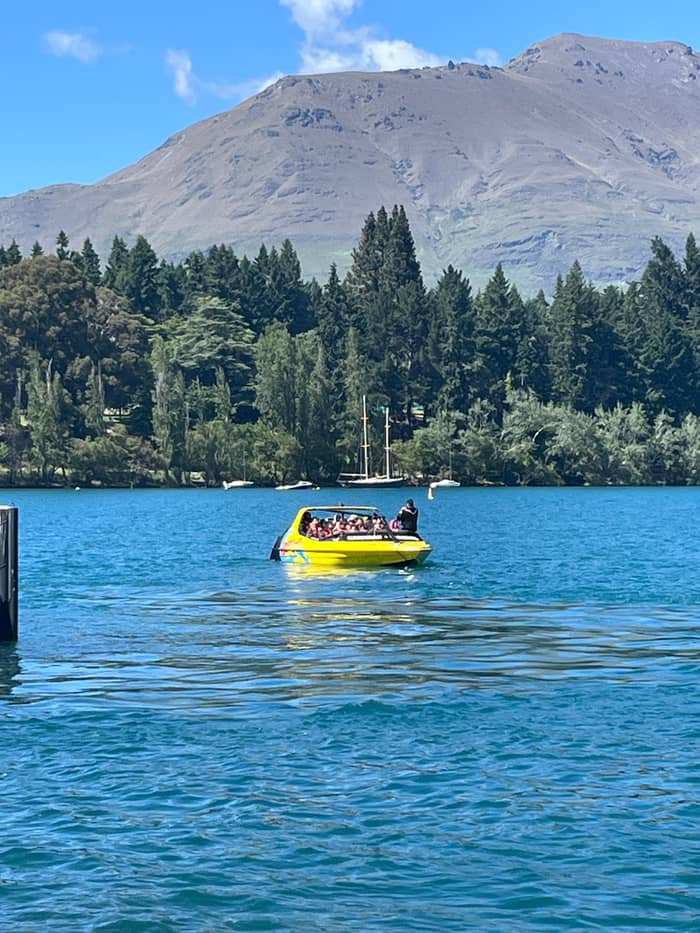
Passenger
In your seat
Several of the safety features you will see on board grew out of hard experience. KJet says it was the first to fit roll bars to give rollover protection, and that they are now a standard for commercial jet boats.30 After the 2008 roll-over, the commission found that the roll bar left enough space under the upturned hull for the driver and passengers to escape.31
Engines changed too. KJet says it launched the first twin-engine jet boats in 1995, to reduce the risk of losing control if an engine fails.32 At the canyon, Shotover Jet introduced its first twin-engine boats in 2001, and today runs a fleet of seven identical twin-engine boats.33,34 The 2021 inquiry shows why the details still matter: a single fuse stopping an engine was enough to take away steering, and the commission asked the whole industry to hunt for weak points of that kind.20
Routes and driving rules moved as well. After the 2008 accident, the operator stopped crossing the bar involved and told drivers to steer straight onto any bar or bank they could not avoid, to cut the risk of flipping.19 The lesson running through every report is the same: the river changes, and the system around the driver has to change with it.
Price the ride
Set the number of riders to see each starting fare multiplied out.
Compare 3 alternatives
Set the number of riders to see each starting fare multiplied out.
≈
View≈
View≈
ViewCurrency conversion uses the ECB reference rate on GetYourGuide from-prices. The exact price is displayed when you book.
The published record
First inquiry
A boat with 10 passengers rolled on a shingle bar in 1997.11
Canyon steering
In 1999 a steering part caught and a boat hit the canyon wall.12,13
Rock face
In 2000, 13 passengers had minor and 2 moderate injuries.14
Confluence roll
In 2008 a boat rolled on a sand bar and one passenger drowned.4,5
Engine stop
Every driver who takes paying passengers out must hold a current commercial river driver licence issued under the rule.1 To get one, a driver must be at least 18 and have completed a structured training programme with not less than 50 hours supervised experience as a commercial jet boat driver.2 The licence is valid for 10 years from the date it is issued.35
Shotover Jet says its own drivers complete 120 hours of training on the water, 70 more than the licence requirement.36 Its boats are audited every year by two independent parties, one of them a specialist authorised by Maritime New Zealand.37 Steering nozzles are crack-tested every 500 hours and replaced every 2,000 hours whether damaged or not.38
The same rule also sets the frame of each trip. Trips may only run between sunrise and 30 minutes before sunset unless the operator’s safety plan provides otherwise.39 Boats keep to the right, and a boat heading upstream gives way to one coming down.40 Throughout every trip, a responsible person off the river must know who is driving, how many are aboard and when the boat is due back.41
Video
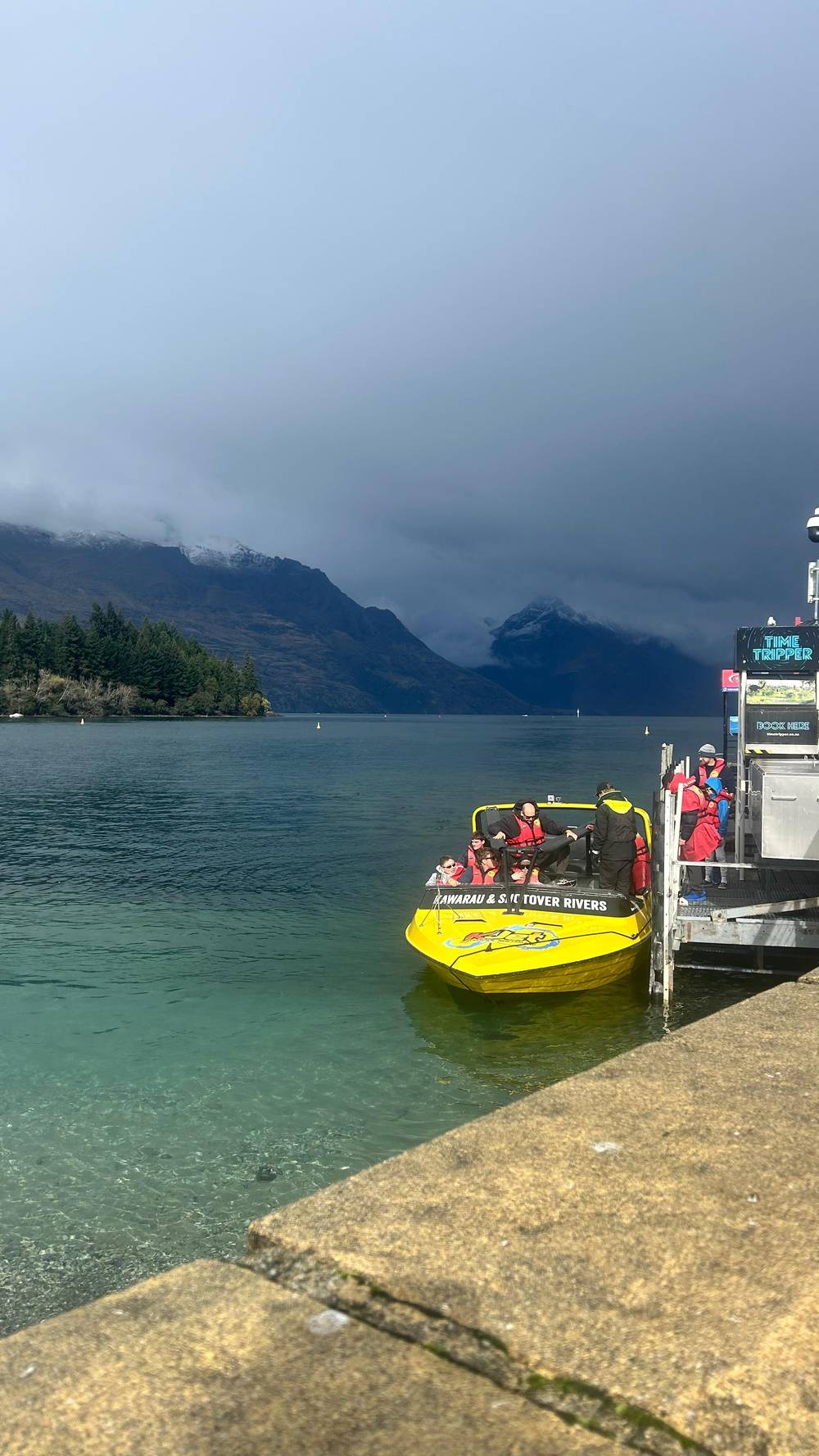
Shotover Jet Queenstown on YouTube · Until you tap play, no video is loaded.
The objective of Part 82 is to preserve the health and safety of those on board commercial jet boats by limiting the likelihood and consequences of serious harm.
If you are thinking of a jet boat in Queenstown when pregnant, the answer from the two big operators is no. KJet prohibits pregnant passengers from riding.6 Shotover Jet does not allow riding during pregnancy, citing the physical nature of the ride.7 The lake jet ride listing says jet boating is not recommended in pregnancy.
Backs and necks are the other common worry. Shotover Jet asks anyone with a medical condition, including back or neck problems, to speak with its team, who will assess whether the ride suits them.21 The Skippers Canyon listing asks you to tell the operator about back problems, medical conditions or pregnancy before you go.
Mobility matters as well. At KJet, a rider who cannot hold the handrail or brace with their feet for the whole trip needs a support person beside them.22 At the canyon, anyone who cannot get in and out of the boat unaided needs two support people booked on the same trip.23 Raise these questions at booking, well before the day. Operators would rather answer a question by email than turn someone away at the water, and a clear answer in writing makes the day calmer for everyone.
The spin is the moment people worry about most, and it is also the most controlled moment of the ride. On thrill trips, Part 82 requires that passengers are told spins will happen and are given adequate warning before each one.24 Thrill-ride seats must face forward and be padded, and every passenger must have a handhold.25
Your part is simple. Wear the life jacket you are fitted with, which by rule stays on whenever the boat is on the river.3 Stay seated with your arms inside the boat, hold the rail, and brace your feet when the driver signals.24 Stow phones and cameras while the boat moves: loose objects are a hazard in a spin.29
Weather and water are the operator’s call. Shotover Jet checks the river every morning, and heavy rain or flooding can postpone or cancel trips.42,43 If the operator cancels, you get a full refund or a free new date.44 A cancelled ride is the system working, not failing, and the town ride on this site refunds you in full if you cancel 24 hours ahead.
FAQ
Shotover Jet asks riders with back or neck problems to talk to its team, who assess suitability.21
Maritime rules require adequate warning before spins and extreme turns on thrill trips.24
Sources
More to read
Not sure which Queenstown river ride suits you? Ask a real person here.